Canning
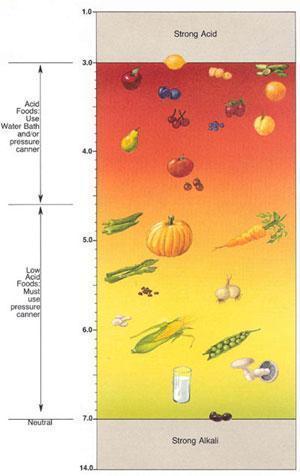
Home canning of foods is done using two processing methods based on the type of food being canned. Low acid foods, such as vegetables and all meats, must be pressure canned. High acid foods, such as fruits, tomatoes, pickled foods, jams and jellies, are processed using a boiling water bath. This is based on the acidity, or pH, of the food. The dividing point is a pH of 4.6. Any food above 4.6 is a low acid food. Any food below 4.6 is a high acid food.
Canning Low Acid Foods
- Preserving Green Beans - Kansas State University
- Preserving Sweet Corn - Kansas State University
- Preserving Peppers - Kansas State University
- Preserving Vegetables - Kansas State University
- Canning Vegetables Safely - University of Wisconsin
- Canning Meat, Wild Game, Poultry and Fish Safely - University of Wisconsin
Canning High Acid Foods
- Preserving Apples - Kansas State University
- Preserving Cherries - Kansas State University
- Preserving Cucumbers - Kansas State University
- Preserving Peaches - Kansas State University
- Preserving Peppers - Kansas State University
- Preserving Strawberries - Kansas State University
- Let's Preserve Pears - Purdue Extension
- Let's Preserve Berries - Purdue Extension
- Let's Preserve Fruit Pie Fillings - Purdue Extension
- Canning Fruit - based Baby Foods - University of Georgia
- Canning Fruits Safely - University of Wisconsin
Tomatoes and Tomato-based Products
- Preserving Tomatoes - Kansas State University
- Canning Salsa Safely - University of Wisconsin
Did You Know?
Home canned foods should be consumed within one year of canning.
- Identifying and Handling Spoiled Canned Food
- Problems and Solutions with Canned Foods
- Problems and Solutions for Canned Fruit Juices
Other Resources
Clearjel Resources
To make fruit pie fillings, ClearJel® is the ideal thickener. Here are some sources:
- Glenn's Bulk Foods - 620-662-2875
Download Adobe Acrobat Reader to view publications in PDF format.